Two labs open: a gift, and an open call
Today the DAX Foundation opens two labs: the Sound Lab and the Gesture Lab.
The Foundation filed its articles under the Canada Not-for-profit Corporations Act on 4 November 2026, and the certificate is on its way. We are marking the day the way we mean to go on: with something given away, something asked for, and an honest look at the work as it stands.
The Sound Lab
First, a gift: what does love sound like?
The first thing the Foundation gives is a small studio for one question: what does love sound like? It runs in your browser. There is no account and nothing to install.
Here is what happens when you open it.
- A heartbeat. A field of light gathers into a heart that beats, slowly, at 66 beats a minute. It starts without colour.
- Your language. You tap the word for love in your language. There are 17 to choose from, from amour and amor to حب and प्यार. The tap rings a bell, and the colour blooms in.
- One question. You hold the beating heart if you are 13 or older; its ring fills and its heartbeat quickens. “I’d rather not say” is always there as a button, and either answer is fine.
- The first experiment. A film’s love theme becomes its chords, the chords become the feelings you hear in them, the feelings become notes, and the notes become your sound. The studio guesses the feelings first; you decide. Every step plays as you go, and the light follows the sound and takes the colours of the feelings you chose.
- The reveal. The light gathers into a ring of the twelve notes around your card, and your sound plays. It ends the way the language begins: love called and answered, D then G.
- Pass it on. You can send it to someone, or remix it in one tap: one answer turns to its next choice, and the remix is a new generation of the same idea.
After the first one, there are 150 more experiments, in five rings that open as you go: Spark, Echo, Chorus, Harmony and Constellation. Some take a minute and some go deep. Or you can design your own: start from a song, a memory, a place, a person, the weather, a word in your language, and build the stages yourself. You pick the voice (bell, soft, glass or pulse) and the tempo. A notebook keeps what you made and what was sent to you, and you collect the letters of a small alphabet of love as you discover them.
It began with a piano piece the founder composed by feel, each note chosen for the emotion it stirs. Two hearts are two notes: D calls, G answers. Love comes first, and it means the whole range: family, friendship, belonging, care. Beside it grow the things we wanted the first gift to be about: tenderness, longing, hope, awe, curiosity, togetherness.
What stays with you. Everything you make stays in your browser. Nothing is sent anywhere. A link you share carries your experiment inside the link itself, after the “#”, and browsers do not send that part to any server. Words you type stay on your device unless you choose to put them in a link. There is no tracking on the page. One button erases everything it kept.
The music. Every sound is made in your browser from its own notes and chords. When an experiment starts from a film, it uses the chords only, credited to their composer: never the tune, never the words, never a recording.
The languages. The page and its 17 languages are new. Most translations are drafts awaiting review by native speakers, and the experiment texts are in English for now. The page says so where it applies.
The research behind it is building an open dataset of what love sounds like, free to anyone, anywhere. Short paid surveys at research.daxfoundation.org feed it today. Adding your own experiment to it will be optional, for people 16 or older, and you will see exactly what would be sent before anything is. That round is not open yet.
The Gesture Lab
An open call: Resonance UI
The second thing is a request. We are opening research into what we are calling Resonance UI, and we are looking for partners.
It is research into nonverbal communication. Learning has never been only words. It is a hand that points, eyes that follow it, a body that leans in, a voice that rises when something matters, a room that turns to look at the same thing. We want to study nonverbal, multimodal and embodied communication in learning, with care:
- gesture, and co-speech gesture: the hands that move with the words;
- gaze, and shared attention, especially across large displays;
- posture, and movement around shared displays;
- prosody: the pitch, timing and stress of the voice;
- embodied cognition: the body’s part in thinking;
- how a group reasons together around shared visual material.
We are also assessing teacher receptivity: how ready teachers are to equip themselves, explicitly, to better enable learning in their students.
In the founder’s words: “we’re looking for a specific site where it could be the center of research for resonance UI.” One place, a college, a university, a lab or a teacher-education program, anywhere in the world, where the work can live and be studied over time. Research partners are welcome. So is support for the work.
The data will be an open dataset. Brunswick Lab, formerly brunswicklab.com, is now part of DAX Foundation Research, and this is its work now.
This is the call-out
If you are at a university or college, leave your institution’s address below. We’ll email you a code to confirm it’s you. Then you will be notified when we launch, with a one-time sampler link. It opens the lab on your own screens for sixty minutes from the first time it is opened.
We are doing this so we can start sharing research data with you, in a collaborative effort, to be used globally. That means open research data. It does not mean newsletters.
We are experimenting with new ways of expressing cards
The third thing is a look at the work. Much of what we show is cards: a small surface that holds one idea. Here is how we have shown them until now.
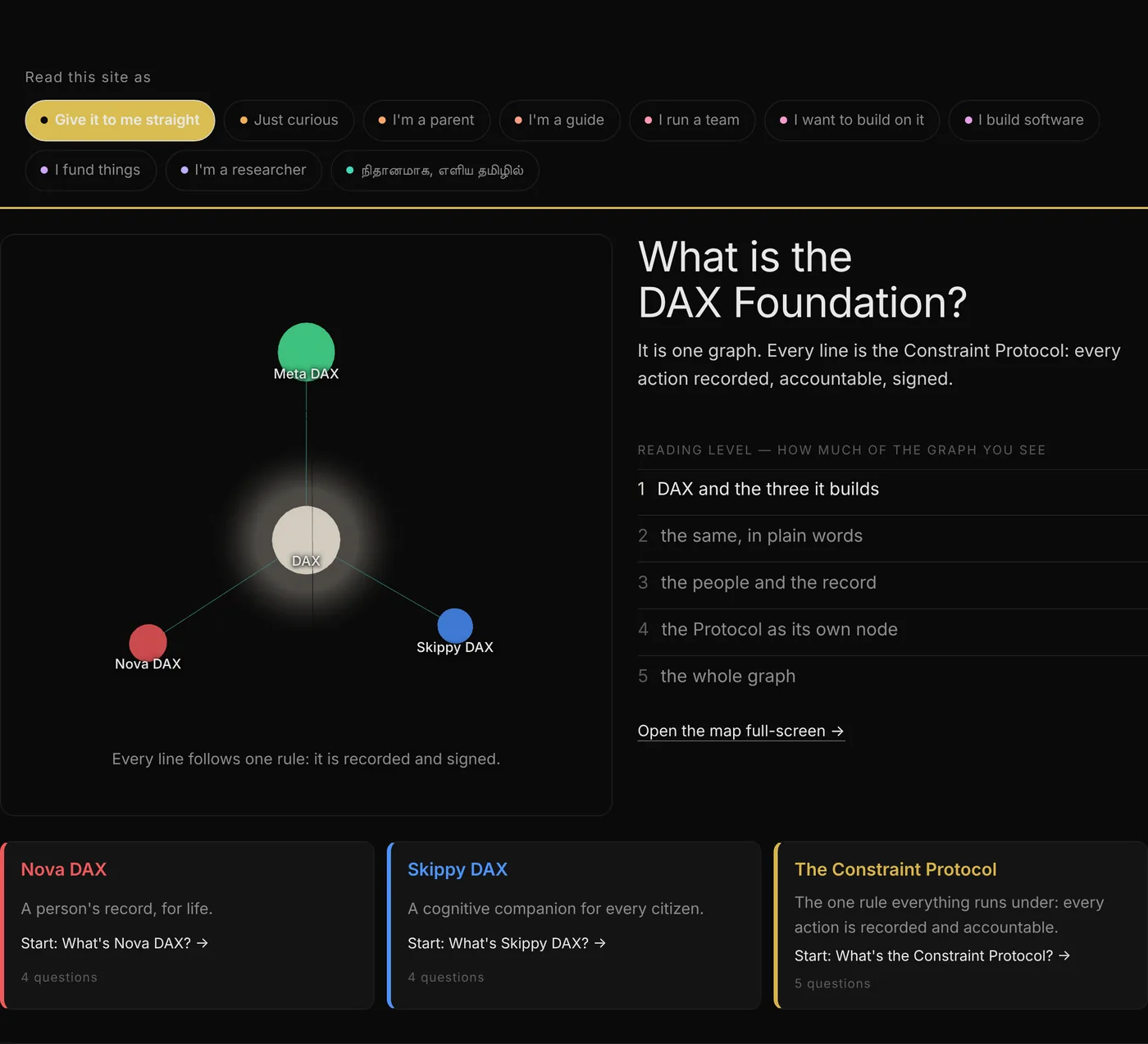
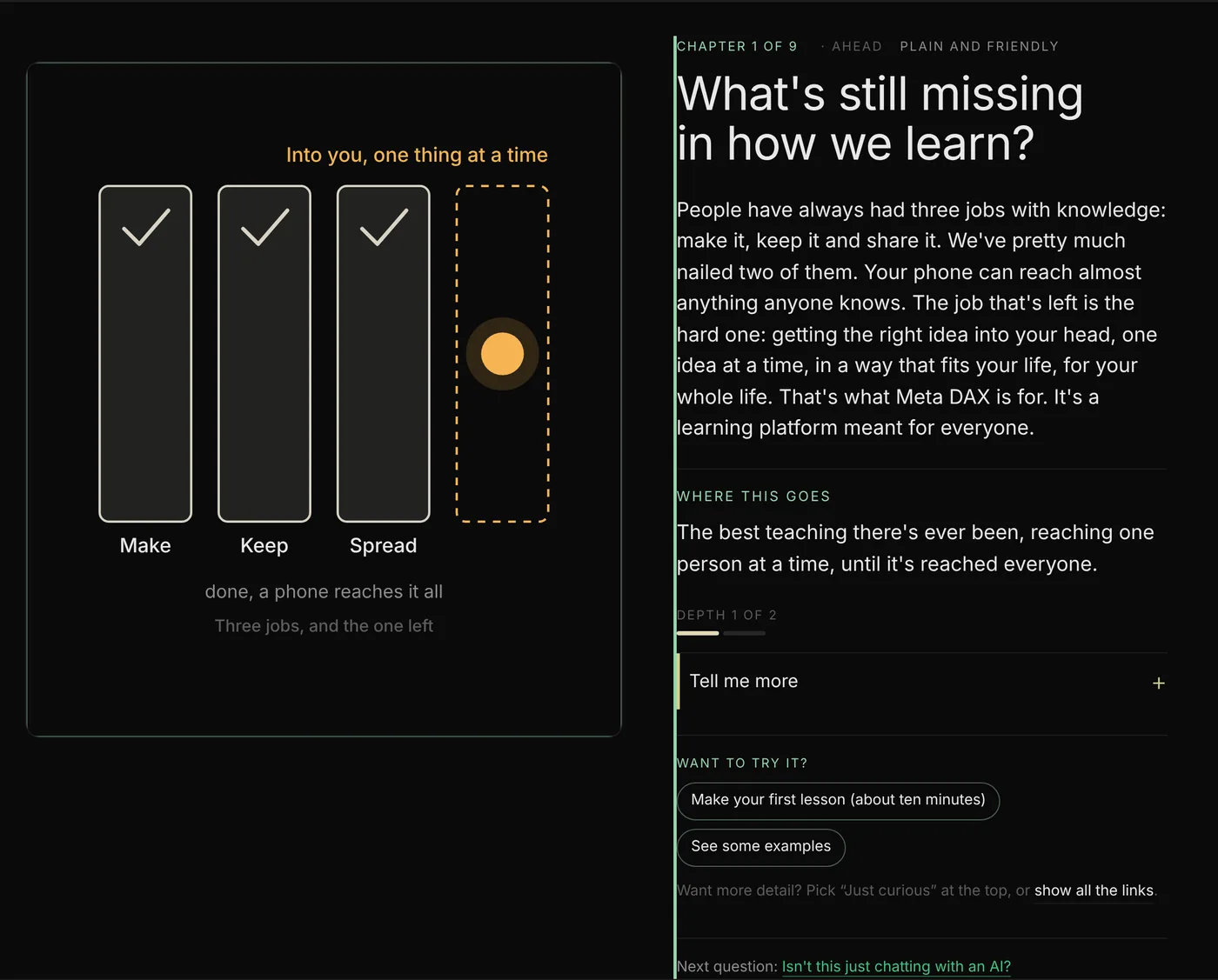
These work. They are also flat: one screen, one reader, one card at a time.
Here is where they are going. The same kind of cards, in a scene that runs across three screens side by side, made for a room of people rather than one.
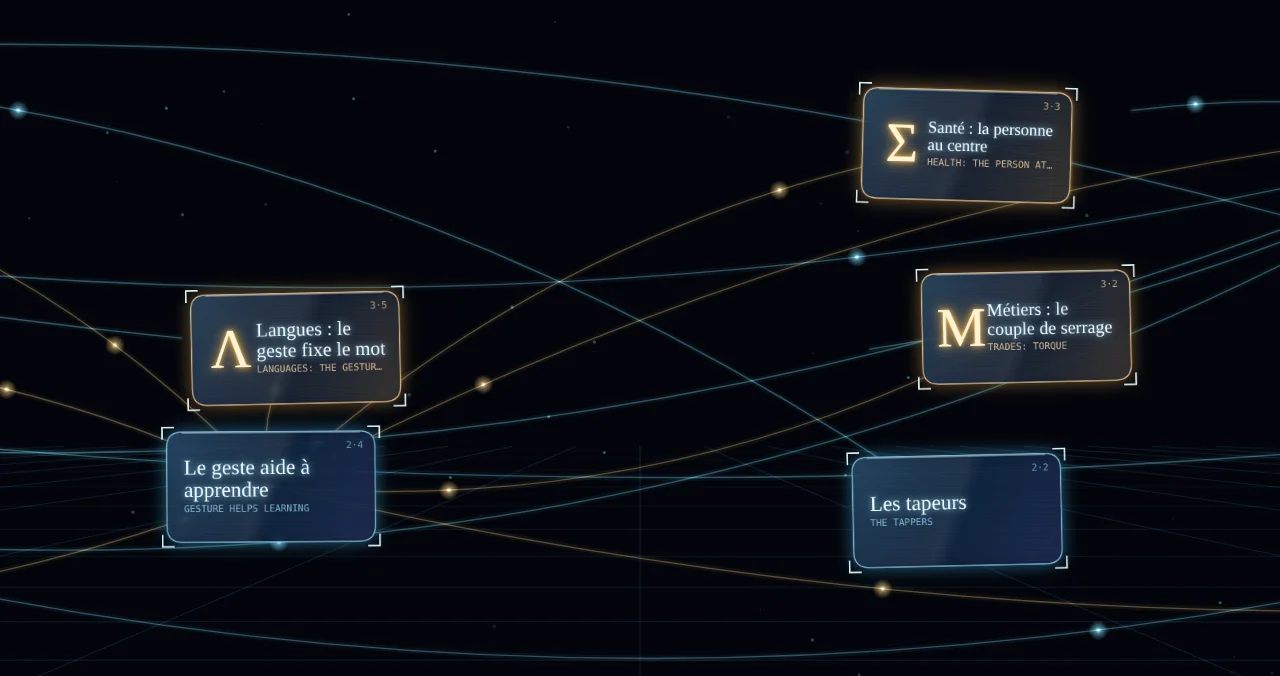
1The cards stream in and link to one another. 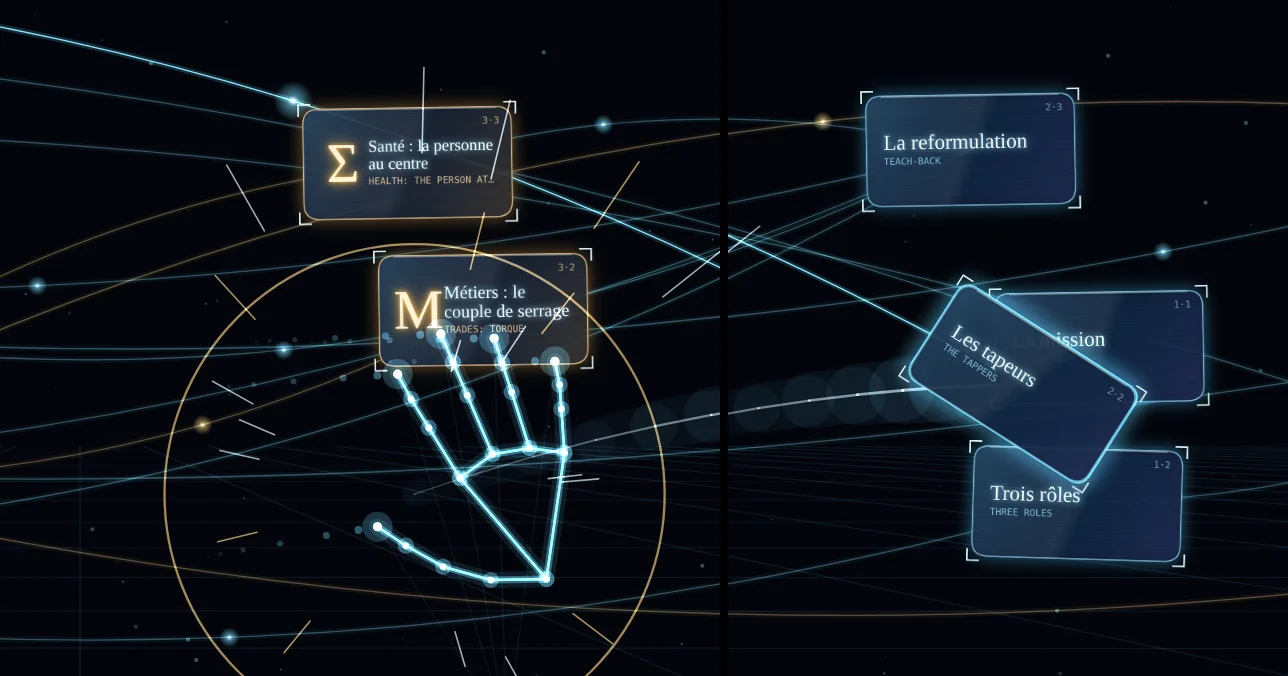
2A card is picked up and thrown from one screen to the next. 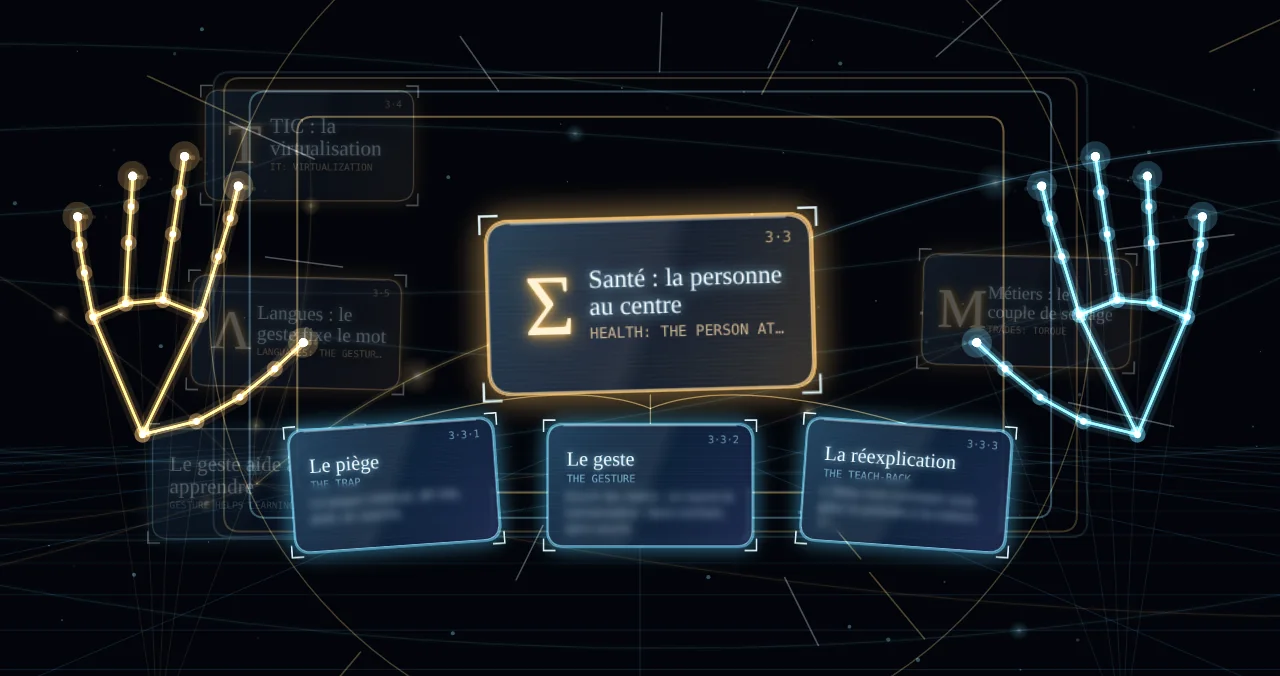
3A card opens into its parts. 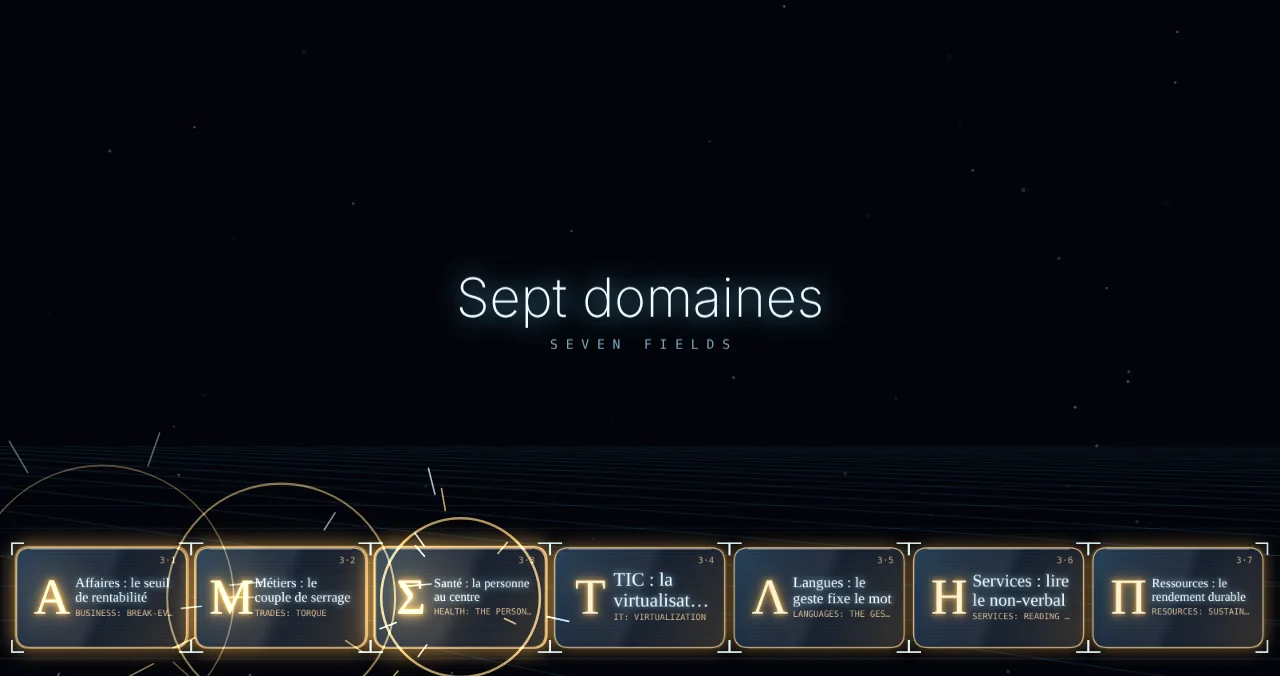
4The cards sort themselves, one group to each screen. 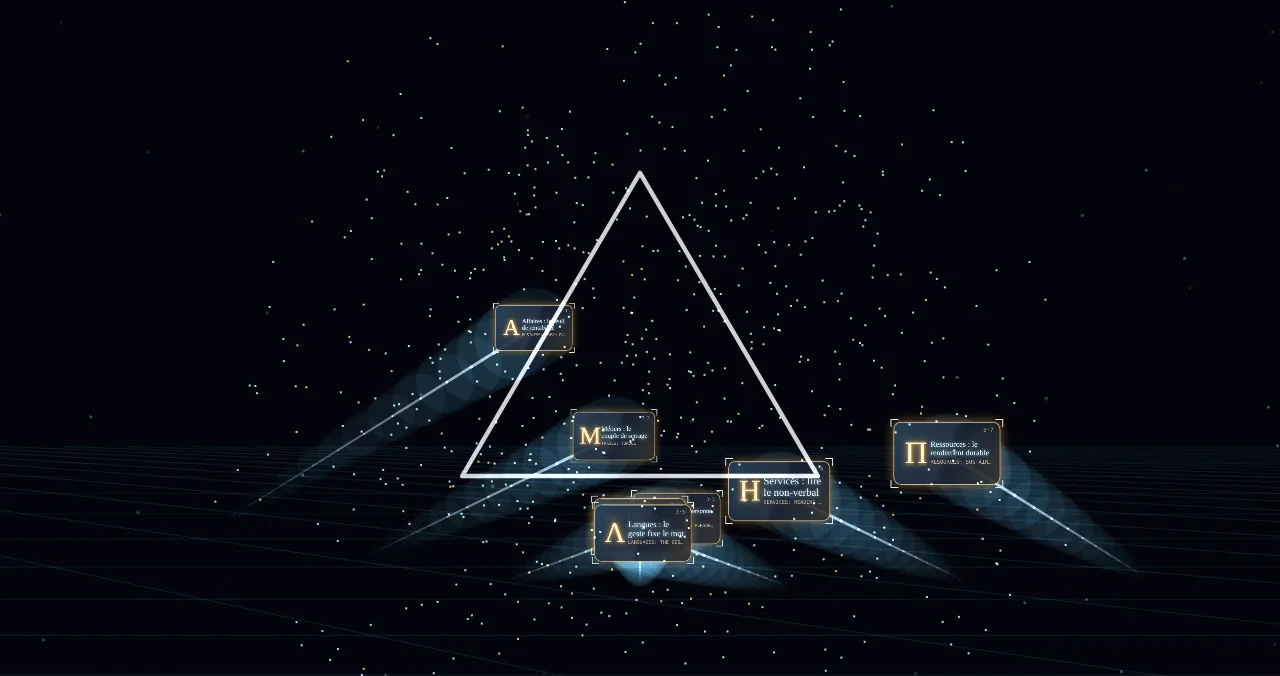
5Everything converges into the Δ.

None of this is finished. It is how we are learning what a card can do when more than one person is in the room.
Inside the Gesture Lab
The fourth thing is the lab itself: Re·UI, the research sampler we built to study nonverbal, multimodal communication. It plays a short intro reel, about thirty seconds, then settles into a plain laboratory demo that a phone can drive.
Each visitor gets a fresh room. Open it on your own screens, with a phone to drive it.
Your phone is only a remote control. It sends two things: 21 points for each hand, which trace the gesture and where you point, and, if you choose to speak a command, the words it recognised. Nothing else. No image and no sound leave the phone. Every phone has a “See the data” link that shows, live, each message it sends and receives, with a short guide to checking it yourself in your browser’s own tools.
It is purposely plain, because it is a laboratory. What matters is what passes from one person to another without words, not how the screen looks. The time-limited sampler links in the call-out above are for institutions; if yours needs something else, message the founder on LinkedIn.
Opening soon
Both labs are open today, and both are early. Here is what is coming next.
- In the Sound Lab: translations reviewed by native speakers; the open research round, where you can add your experiment to the dataset if you choose; and chords from more songs and traditions, each one credited to its source.
- In the Gesture Lab: the one-time sampler links for everyone who answered the call-out, sent at launch; a home for the research at one partner site; and the first open data.
- Across both: the open dataset itself, free to anyone, anywhere.
What today is
A foundation, two labs, a gift and a question. The certificate is one piece of paper. The rest is the work it is for, and we would rather do that work with you.
Which would you try first: the sound of love, or the lab?
Sources
- DAX Foundation Research, “Formerly brunswicklab.com, now part of DAX Foundation Research”: https://daxfoundation.org/metadax/research/#formerly-brunswicklab
- DAX Research, research.daxfoundation.org: https://research.daxfoundation.org/
- Re·UI, the research sampler, DAX Foundation Research: https://re.ui.research.daxfoundation.org/reui-start
- Hipo, university-domains-list, one of the open lists of university domains the call-out checks against: https://github.com/Hipo/university-domains-list
- The “before” images are the daxfoundation.org home page as it stood on 4 November 2026. The “after” images are stills from the sampler’s card scene, rendered across three screens.